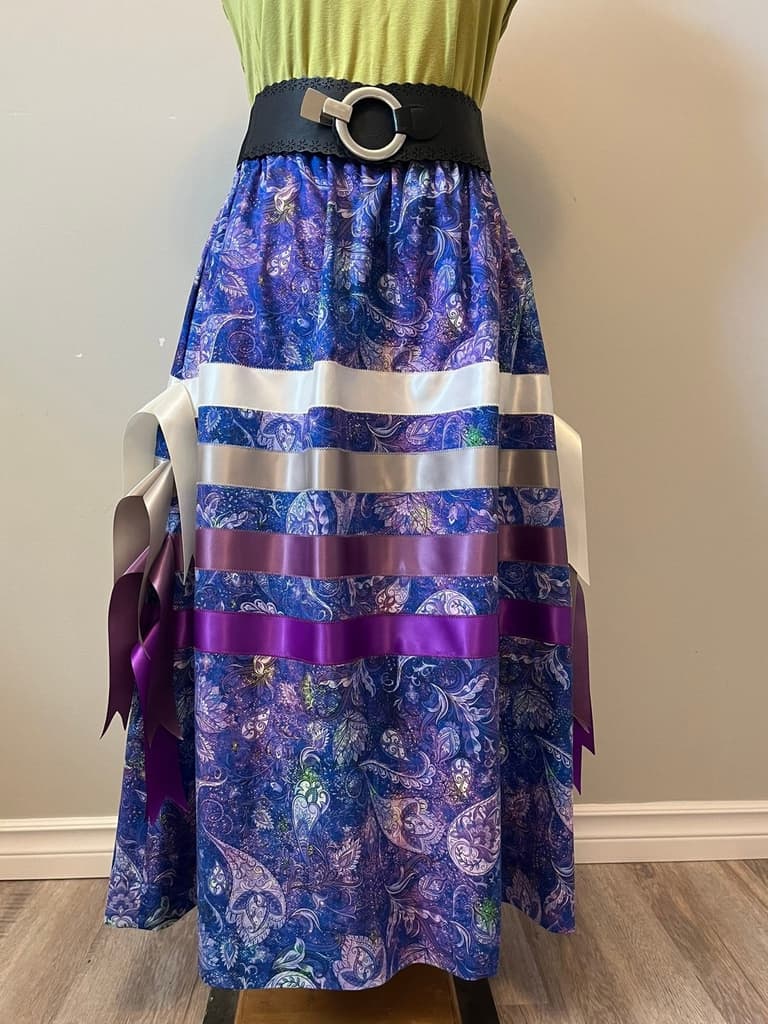
Paisley, in purple and silver
Price on requestAvailable
Ribbon skirt · purple and blue paisley cotton
Five ribbons running light to dark down the skirt, with the tails left long at the side seam.
Salt Spring Island, British Columbia
Ribbon skirts, shirts and beadwork, made one at a time at home on the island. Each piece is the only one of its kind.
What I Make
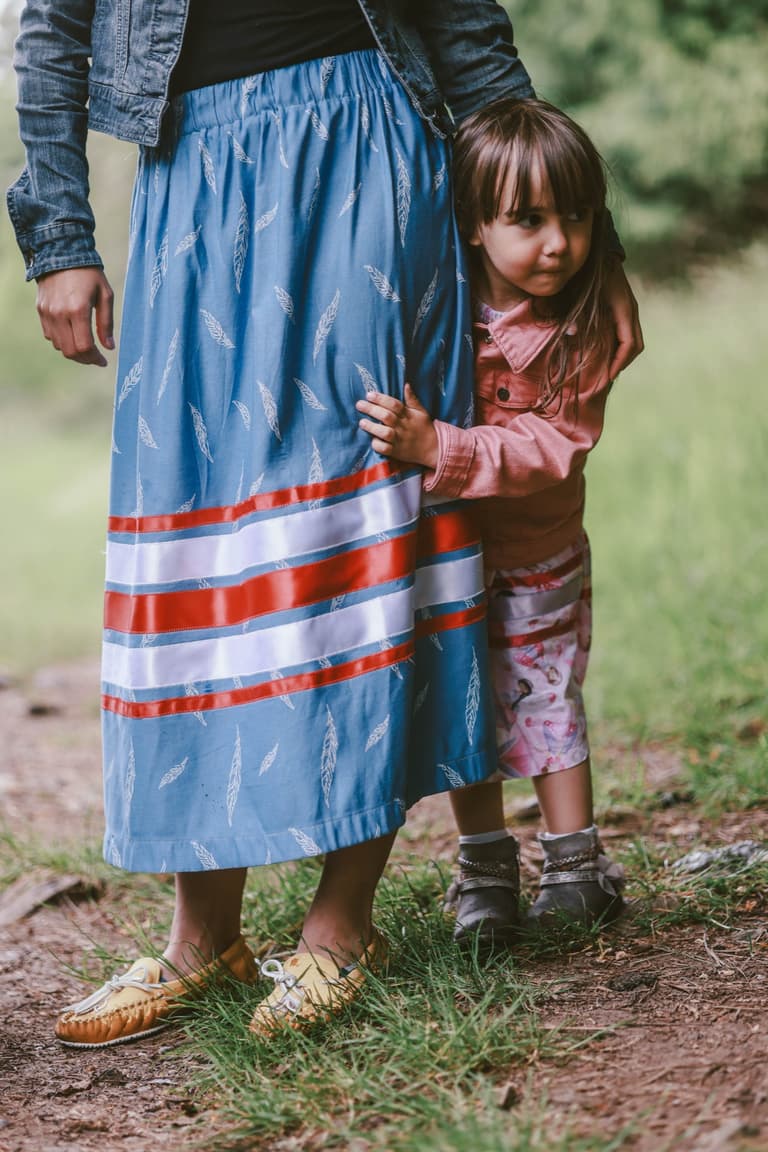
Everything is made at home on the island, a piece at a time. Nothing is made twice, because the cloth and the ribbon were bought for that one piece and then they are gone.
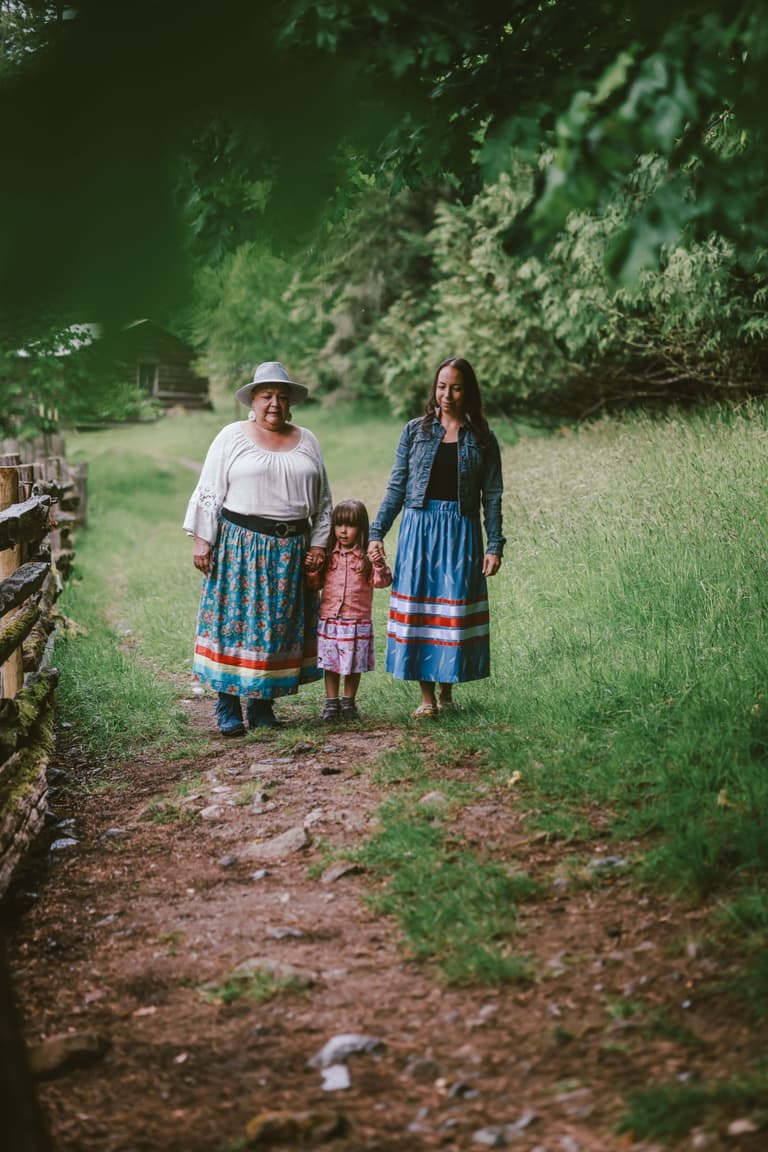
Ankle length and cut full, with satin ribbon laid in rows across the lower skirt. Cotton, and one skirt to a length of cloth. Waist and length are listed with each one.
A pullover with a v-neck, long sleeves and cuffs, ribbon set into the yoke and falling loose from the seams. The same cloth and the same care as the skirts.

Cut with a deep hem so it can be let down twice. Made to be run in, sat in, and grown out of slowly.
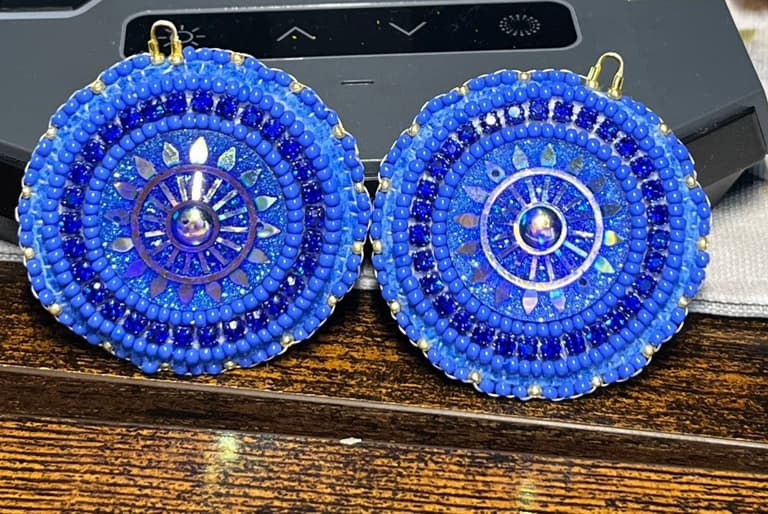
Earrings, mostly. Glass seed beads worked a few at a time onto felt, edged by hand all the way round, on hooks that will not bother your ears.
The Shop
Everything here is finished and ready to go, and there is one of each. The cloth is bought in single lengths and never repeated, so when a skirt is gone it is gone.
Ribbon skirt · purple and blue paisley cotton
Five ribbons running light to dark down the skirt, with the tails left long at the side seam.
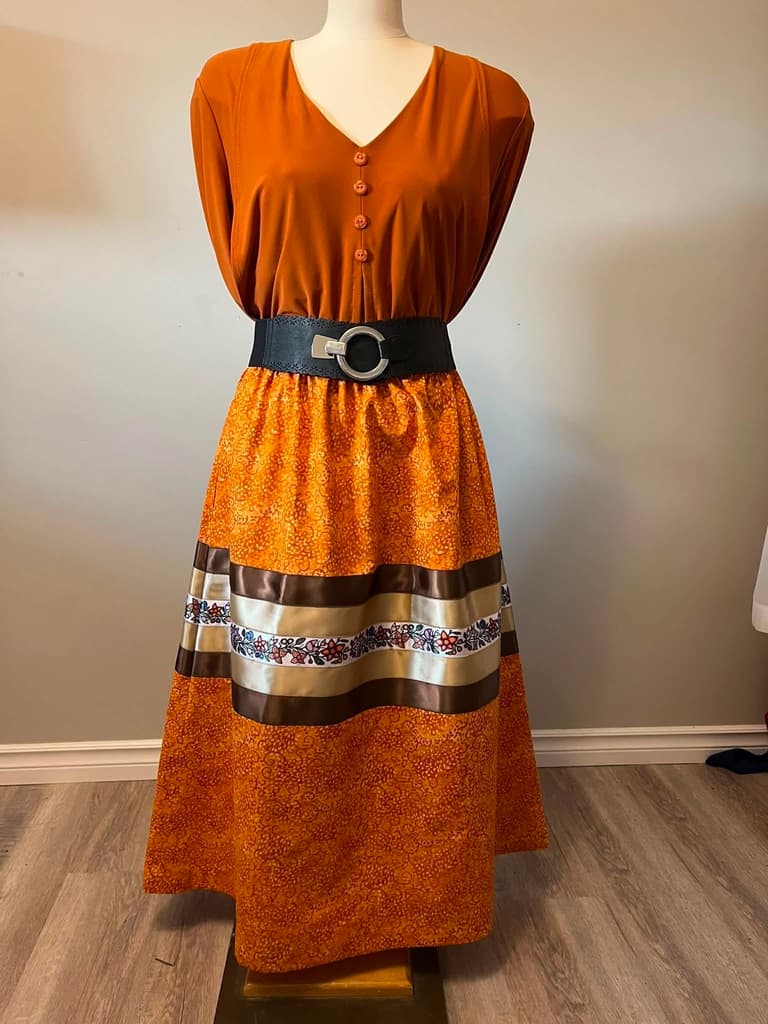
Ribbon skirt · orange batik cotton
Brown and cream either side of a printed floral ribbon. The band in the middle is what the whole skirt was built around.
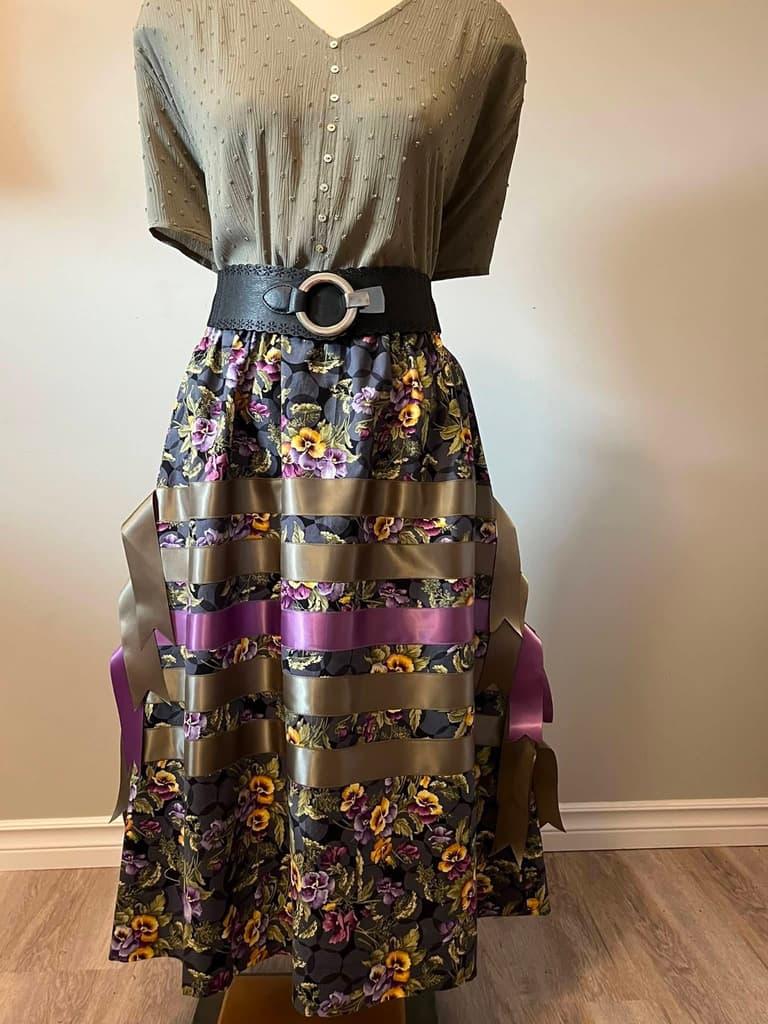
Ribbon skirt · dark pansy floral cotton
Six bands set close together so the flowers show through between them. Bows tied at both sides.
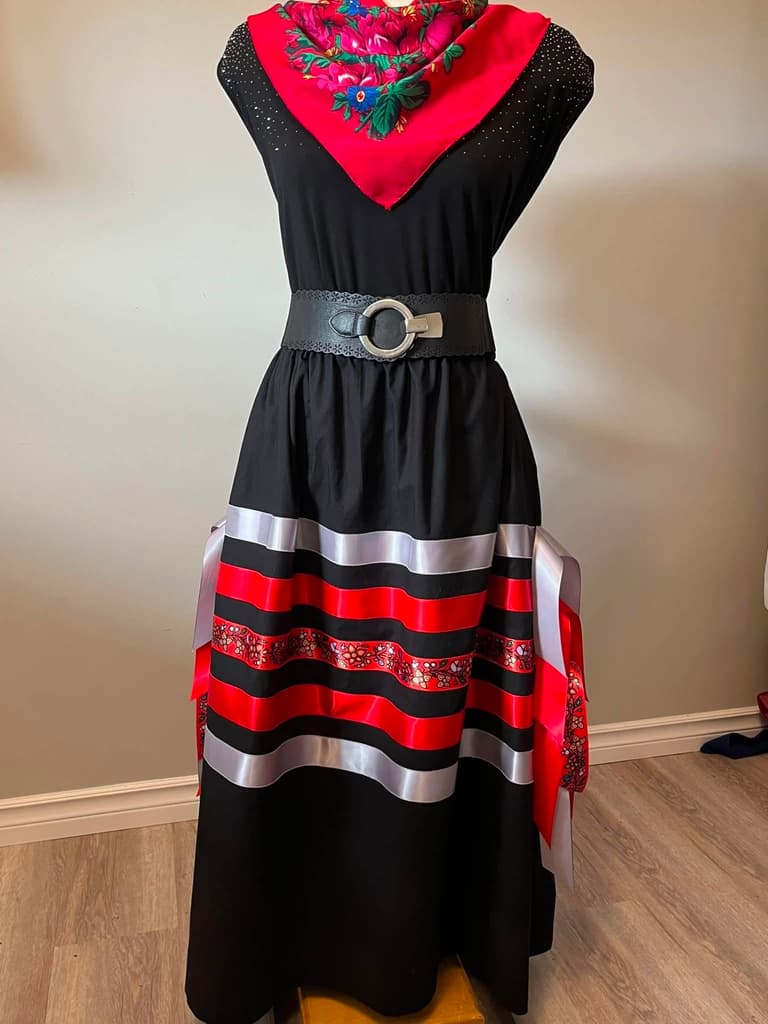
Ribbon skirt · black cotton
Plain black so the ribbons carry it. Shown with a shawl, which is how most people end up wearing it.
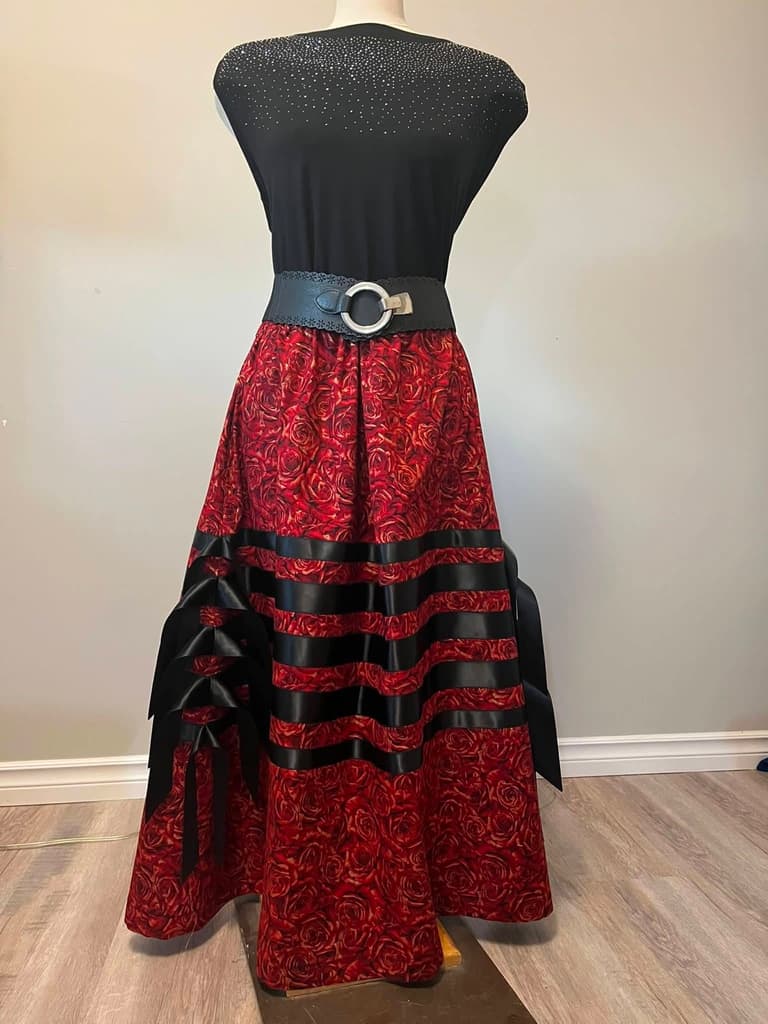
Ribbon skirt · red rose print cotton
Roses under four narrow black bands. The plainest ribbon work she does, and the first one to go.
One of each
There is no restock and no second run. If a skirt has gone, the next one will be a different skirt in different cloth.
How it works →Beadwork
Earrings, mostly. Glass seed beads laid a few at a time onto felt, edged by hand all the way round, and finished on hooks that will not bother your ears. A pair takes an evening or three, depending on what is going on in the middle.
Beadwork · felt, glass seed beads, shell
Two rings of cut glass around a shell centre, edged in gold. The largest pair she makes, and heavy enough that they hang on lever backs rather than hooks.
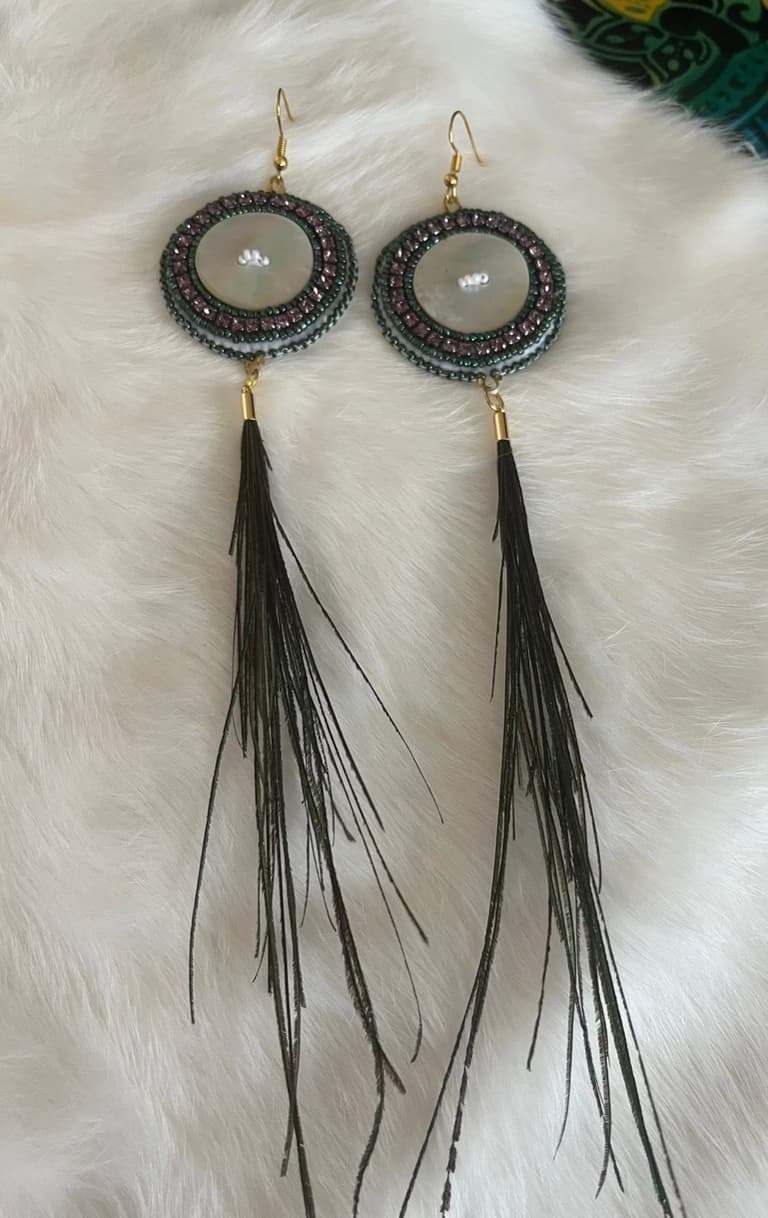
Beadwork · felt, glass seed beads, mother of pearl
Shell set in green and mauve, with a long feather drop below. They move when you do, which is most of the point of them.
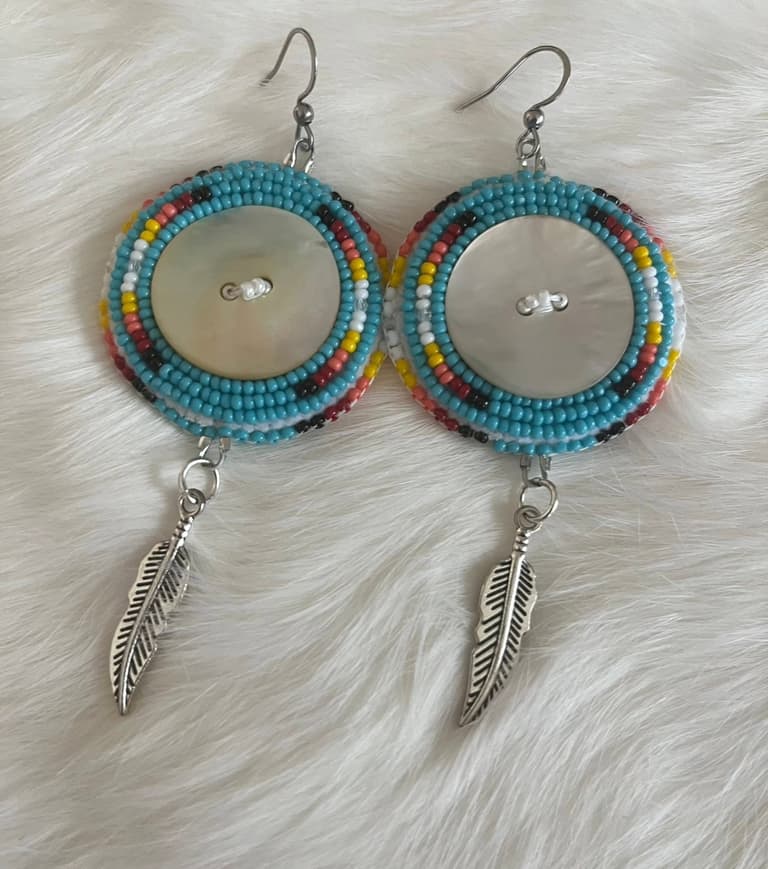
Beadwork · felt, glass seed beads, shell button
A shell button ringed in turquoise, with red, yellow, white and black worked through the outer rows, and a silver feather at the drop.
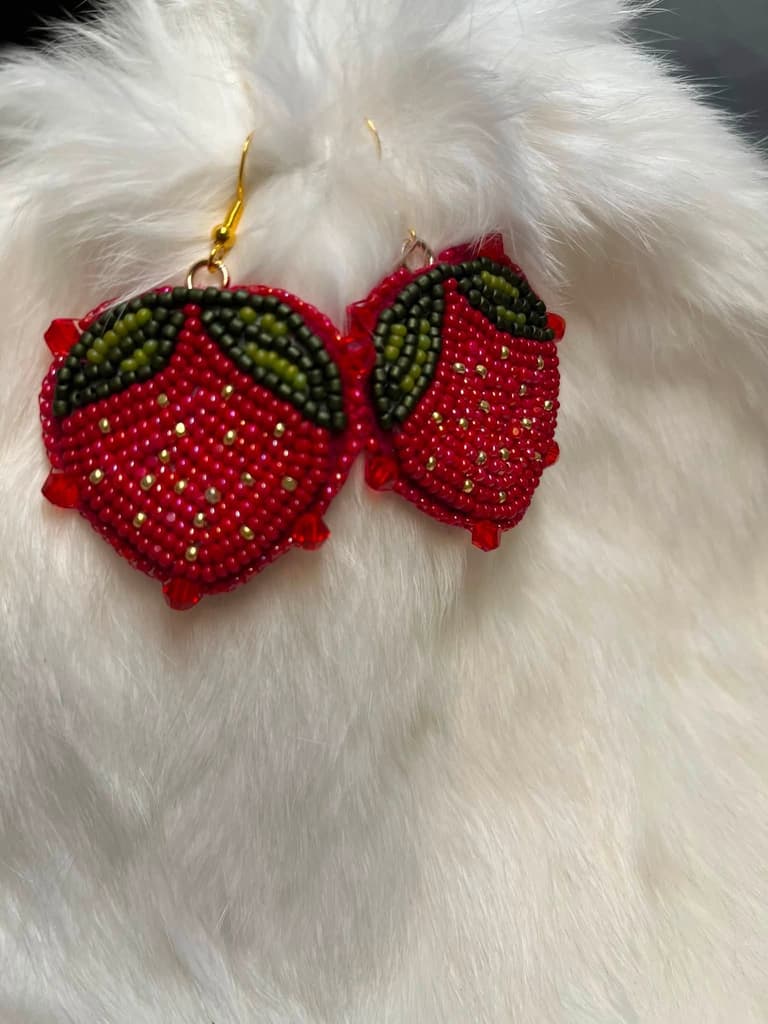
Beadwork · felt, glass seed beads, cut crystal
Beaded solid, with gold picked through for the seeds and cut crystals set around the edge. The pair people photograph most.
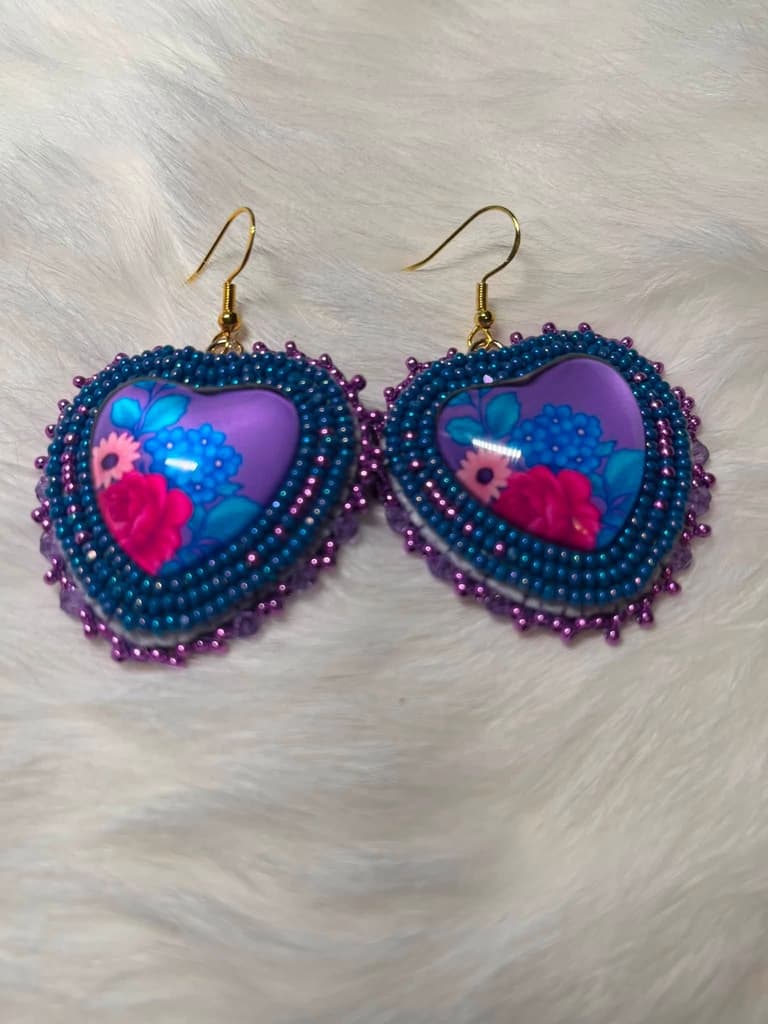
Beadwork · felt, glass seed beads, floral cabochon
A floral cabochon set into a beaded heart, with a picot edge worked in violet all the way round.
New pairs
Beadwork goes up in ones and twos, whenever a pair is done. Ask to be told when it does and you will hear before anybody else.
Tell me when →What It Is
The skirt is older than the ribbon on it. Women's ceremonial skirts were made from hide, fur and bark, and carried painted lines and porcupine quillwork long before any European cloth arrived. When ribbon came it did not begin the tradition. It changed what the tradition was made of.
It arrived through the fur trade. French traders were carrying silk ribbon into the Great Lakes by the late 1700s, and after 1789, when revolutionary France ruled that dress should be plain, the ribbon nobody in Paris wanted was shipped across the Atlantic to be traded here. Hudson's Bay Company records between 1800 and 1807 show it bought in quantity. In Indigenous hands it stopped being trim and became applique: strips layered, cut and folded back so the colours underneath show through, sometimes more than twenty layers deep. The work was done by women, and taught to their daughters.
Then it was made illegal to wear. An 1884 amendment to the Indian Act outlawed the potlatch and the ceremonies the clothing belonged to. In 1914 another required permission from an Indian agent before appearing in 'aboriginal costume' at any dance, show, exhibition, stampede or pageant, and permission was routinely refused. Both stood until 1951. Residential schools took the rest, and by the early 1900s the work had all but stopped.
It came back in the 1970s, and it has kept coming. A ribbon skirt is worn now at graduations, in courtrooms, and in Parliament. Deb Haaland was sworn in as United States Secretary of the Interior in one in March 2021, sewn in about six hours by Agnes Woodward, a Plains Cree dressmaker from Kawacatoose First Nation. That is the short answer to why a skirt has a national day.
The colours, the number of ribbons and the way they are laid out all carry meaning, and that meaning is not one thing. It belongs to the wearer, to her family and to her nation, and the teachings differ from place to place. This page will not speak for any of them.
A Short Chronology
Revolutionary France rules that dress should be plain. Silk ribbon falls out of fashion at home, and the surplus is shipped across the Atlantic to be traded.
The earliest recorded ribbonwork applique: a wedding dress worn at Green Bay by a Metis Menominee woman.
Ribbonwork is at its height, having travelled from the Great Lakes out to the Prairies, the Plains and the Northeast.
An amendment to the Indian Act outlaws the potlatch, and with it the ceremonies the clothing belongs to.
A further amendment requires an Indian agent's permission to appear in 'aboriginal costume' in public. It is routinely refused.
Both provisions are finally taken out of the Indian Act.
The work returns alongside the wider Indigenous rights movement, now sewn on machines.
The first National Ribbon Skirt Day is marked on 4 January.
Buying
The checkout is the easy part. The thing worth knowing before you get there is that the stock is genuinely one deep.
Each piece is made once. There is no restock, because the cloth and the ribbon were bought for that one skirt and are not bought again.
Skirts are listed with their waist and their length, and beadwork with its drop. Real measurements on the thing itself, not a size chart to guess from.
Posted anywhere in Canada, usually within a day or two, because it is already finished. Or collect it here on the island.
Cold water, a gentle cycle, hang to dry. Press the ribbons from the back on a low iron and never straight onto the satin.
The Maker
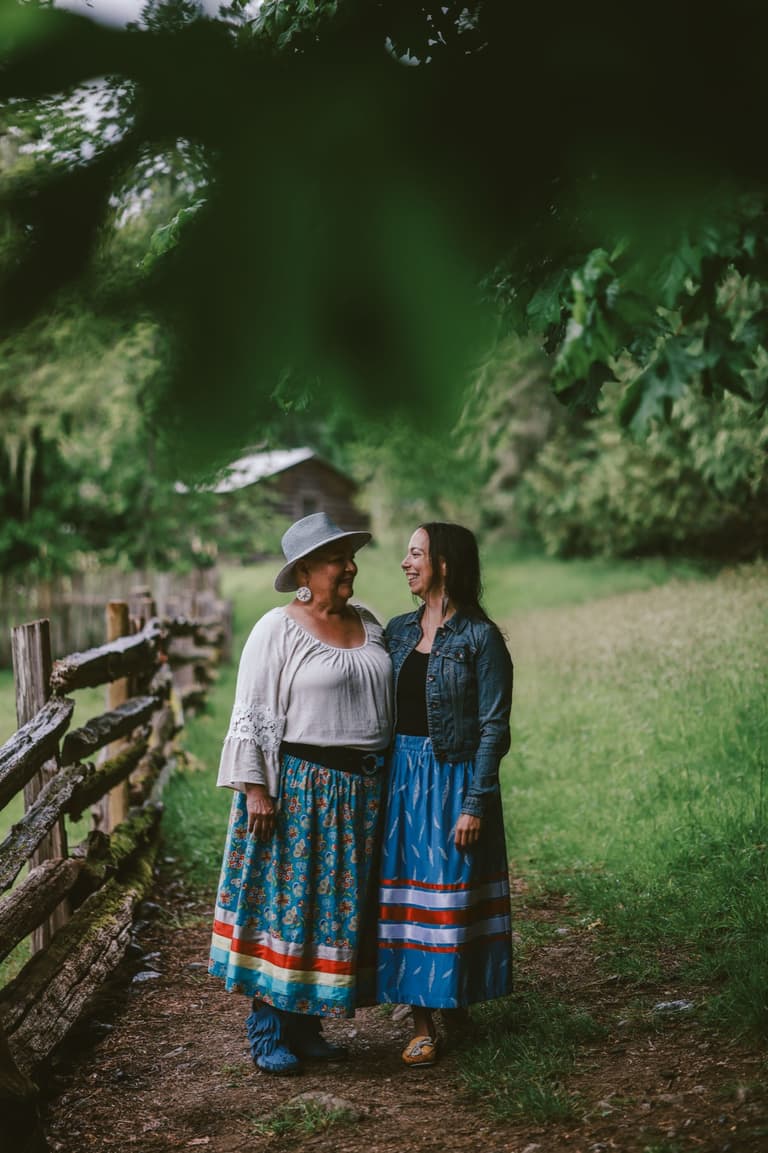
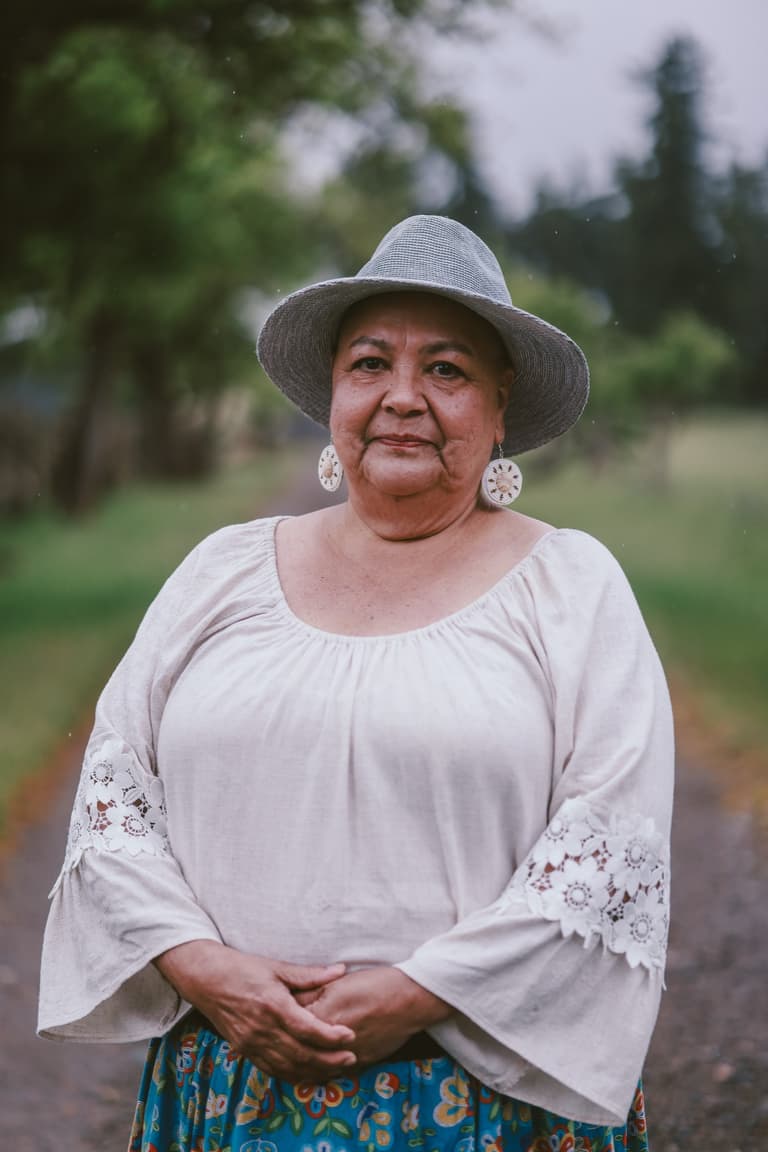
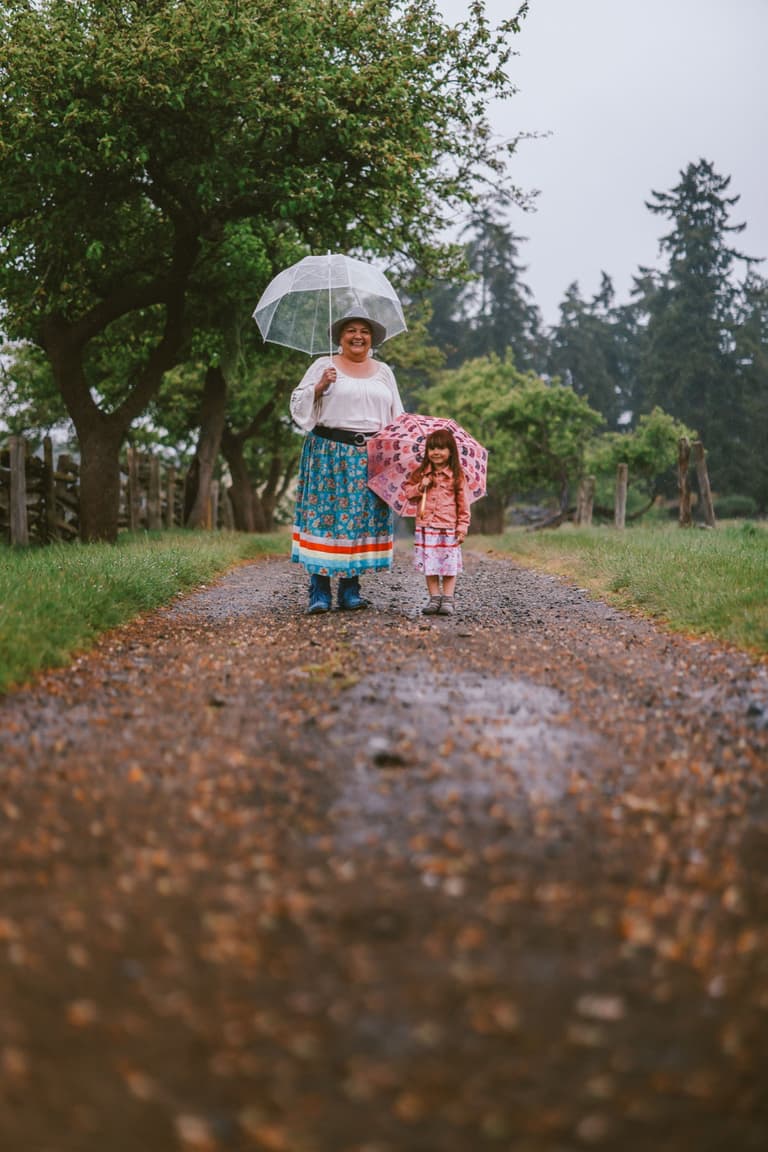
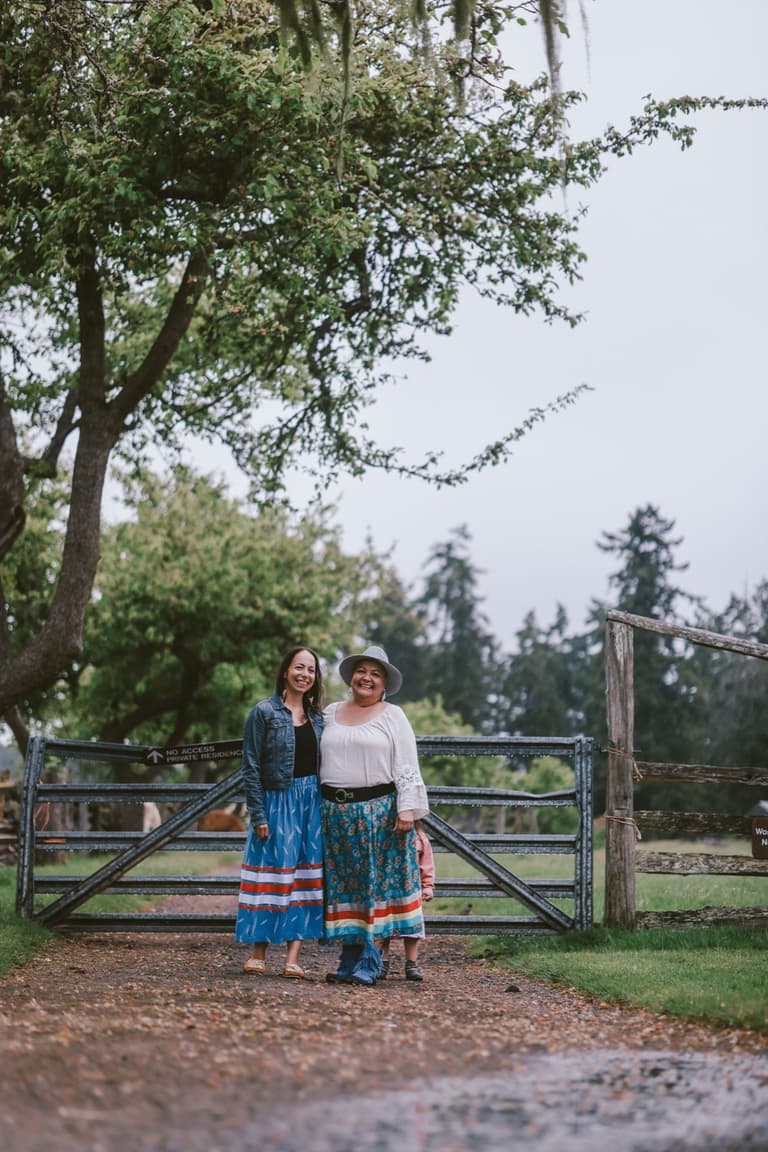
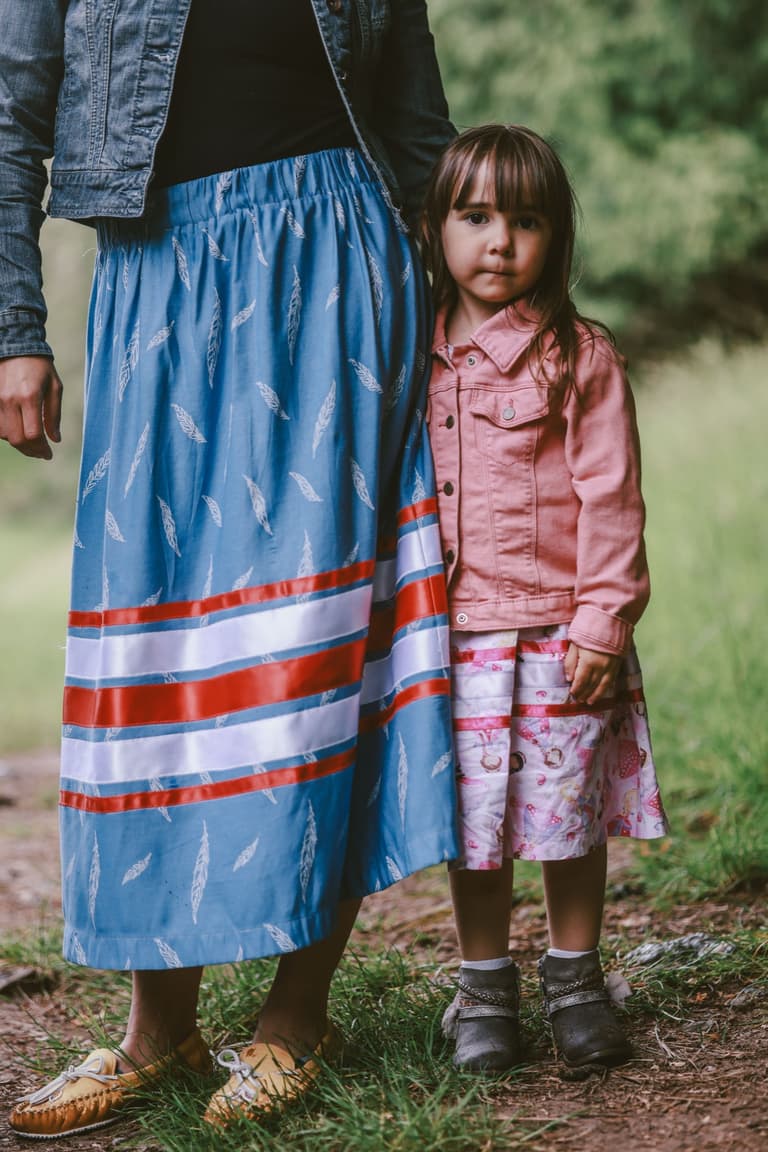
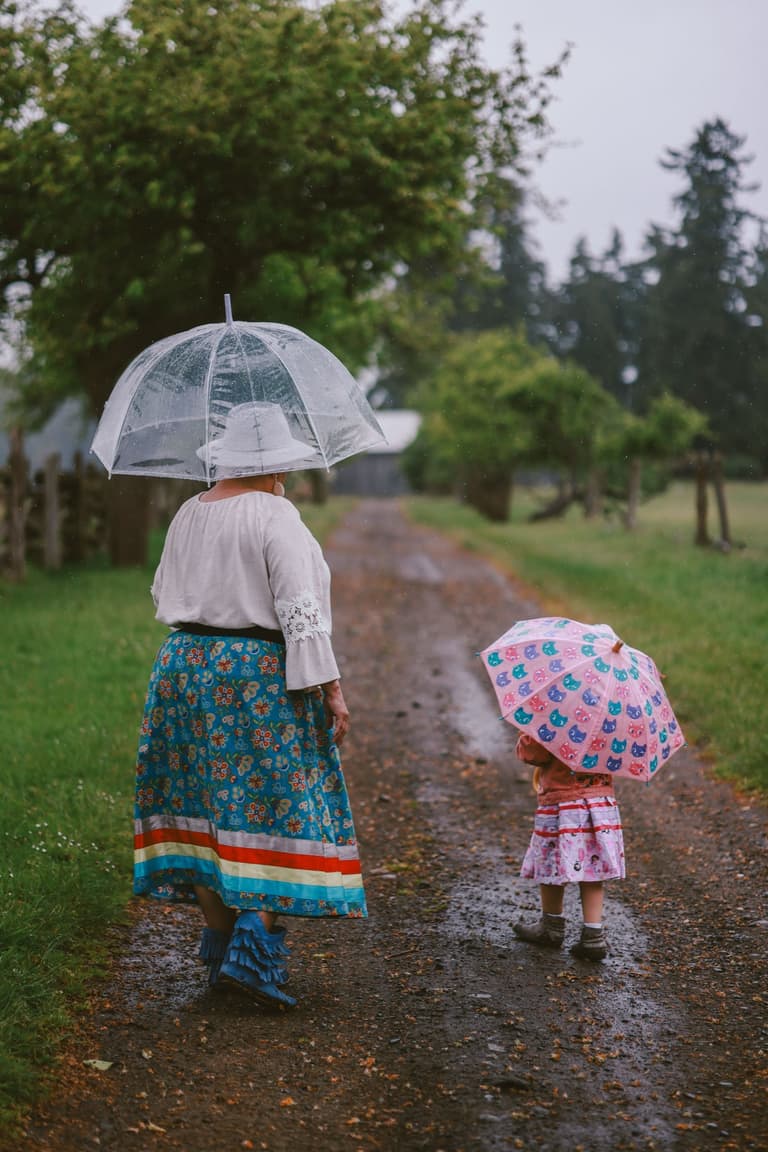
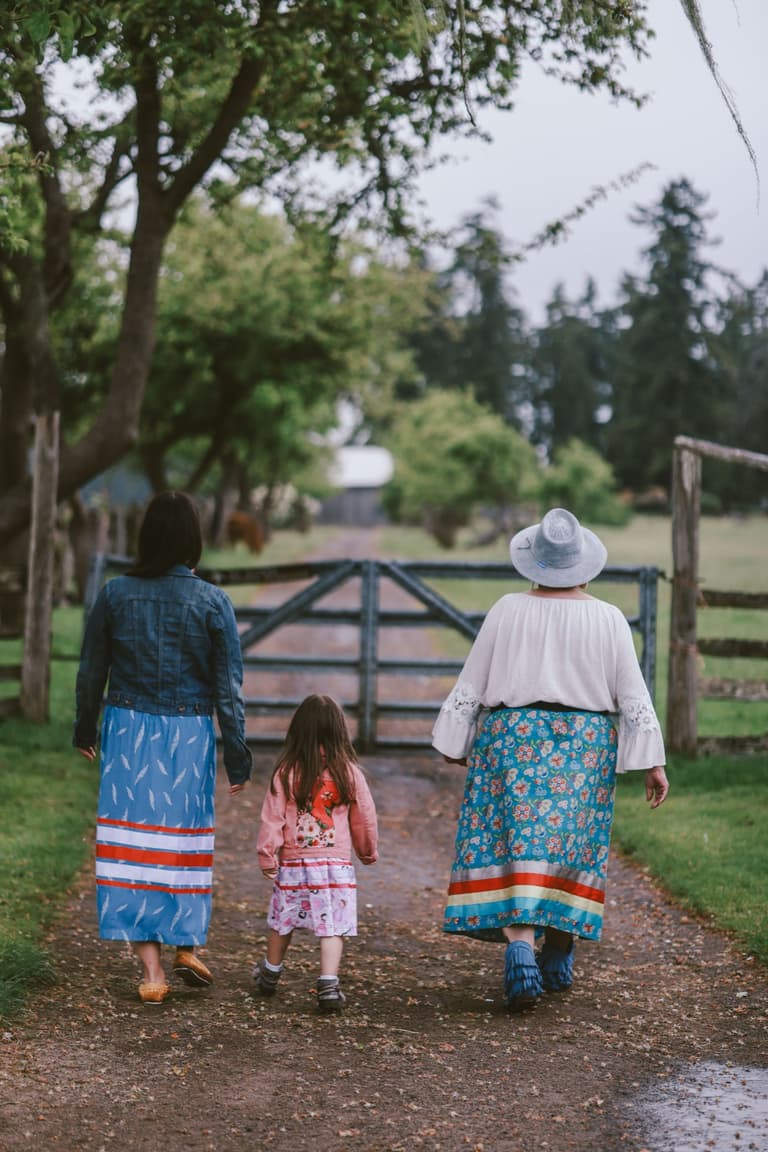
It started with skirts for the grandchildren, because a skirt made by somebody who knows you sits differently to one off a rail. Then skirts for their friends, and for their mothers, and then for people on the island who had heard there was somebody here who sewed them.
Everything is still made in the same room. There is no workshop and no staff, which is why there is only ever one of anything, and why the shop is nearly empty some weeks and full the next.
Get in Touch
Questions about a size, a colour, or whether something is still there. If you would like to hear when new pieces go up, say so and you will be told first.